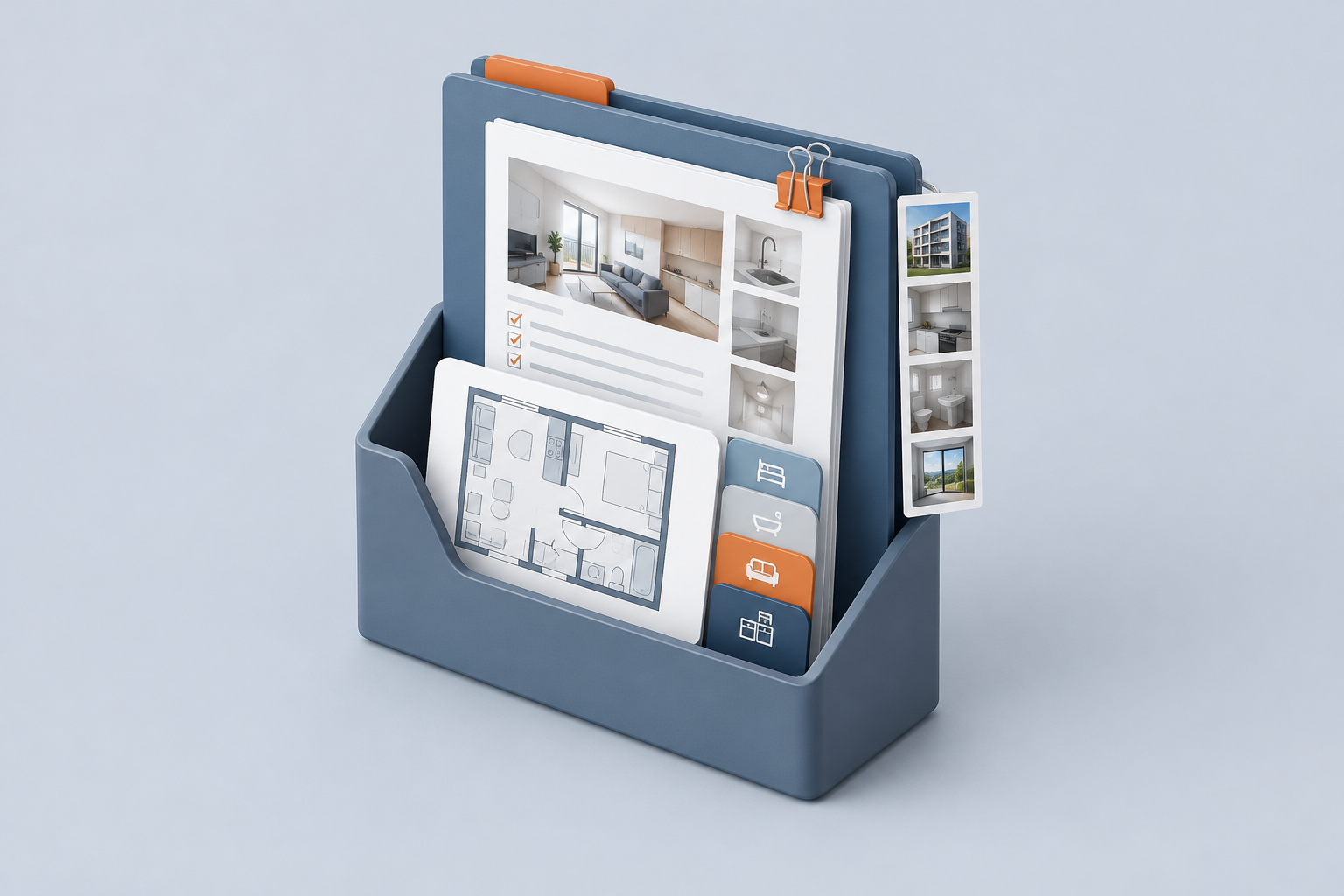
If you only use a move-in inspection report once, it will not help much later. The real value comes when the report is still clear months down the road, if someone asks what was already there. The best way to do that is to keep the report tied to the right unit, write down room-by-room details, add notes and photos, and store it where your team can get back to it fast.
Start with the unit, not the memory
The first job is to make sure the report clearly belongs to one home. That sounds simple, but it matters when a team handles several rentals at once. If the unit name or number is unclear, the report gets harder to use the next time someone has a question.
Put the unit name, unit number, and the type of report at the top. Then keep the report with the same home every time. That way, when you need it later, you are not digging through old files or trying to remember which inspection went with which place.
Write down what you saw room by room
A good report should not just say the home was in good shape. It should show what was checked and what was noticed in each room. That gives the next person a fair picture of the unit as it was at move-in.
Use the same order each time, such as kitchen, living room, bedrooms, bathroom, and any outside areas. For each room, note the condition in plain words. If something needs attention, write that down too. For example, a bathroom might be mostly fine but still have a loose towel bar or a mark on the wall. A short note like that is more useful than a vague summary.
Add photos and notes while the details are fresh
Photos help later because they show what the written note means. A small scuff, a stain, or a crack is easy to forget if it is only in someone’s head. A photo gives the team a second look without needing to visit the unit again.
Use notes to explain anything a photo cannot show. Maybe a drawer sticks, a window opens but does not close smoothly, or a light switch works only part of the time. Those details are easy to miss if you rush. If the report already supports notes and photos together, the record becomes much easier to trust later.
Keep follow-up items tied to the same report
If the inspection shows something that needs fixing, keep that note connected to the report. Do not leave it in a separate message thread or a memory in someone’s inbox. When the report and the follow-up stay together, the next person can see both the condition and the next step.
This is especially helpful when a small team is busy. One person may do the inspection, another may handle the repair request, and a third may answer the tenant later. A single clear report keeps those handoffs from getting messy.
Store the report where your team can find it later
The report is only useful if people can find it without a long search. Keep it in one place with the other records for that home. Then, if a question comes up during a later visit, your team can open the old report and compare it with the current condition.
If you are using a preview or a system with example records, the same rule still applies: make sure the report is easy to open, easy to read, and tied to the right unit. That is what turns a one-time checklist into a record your team can actually use.
A simple rule for deciding whether the report is good enough
Ask one question before you save it: would someone else understand this unit from the report alone? If the answer is yes, you are in good shape.
A useful report usually does three things. It shows which unit was checked. It lists room-by-room conditions in plain words. And it keeps notes, photos, and follow-up items together. If one of those pieces is missing, the report may still help a little, but it will not help as much when the next issue comes up.