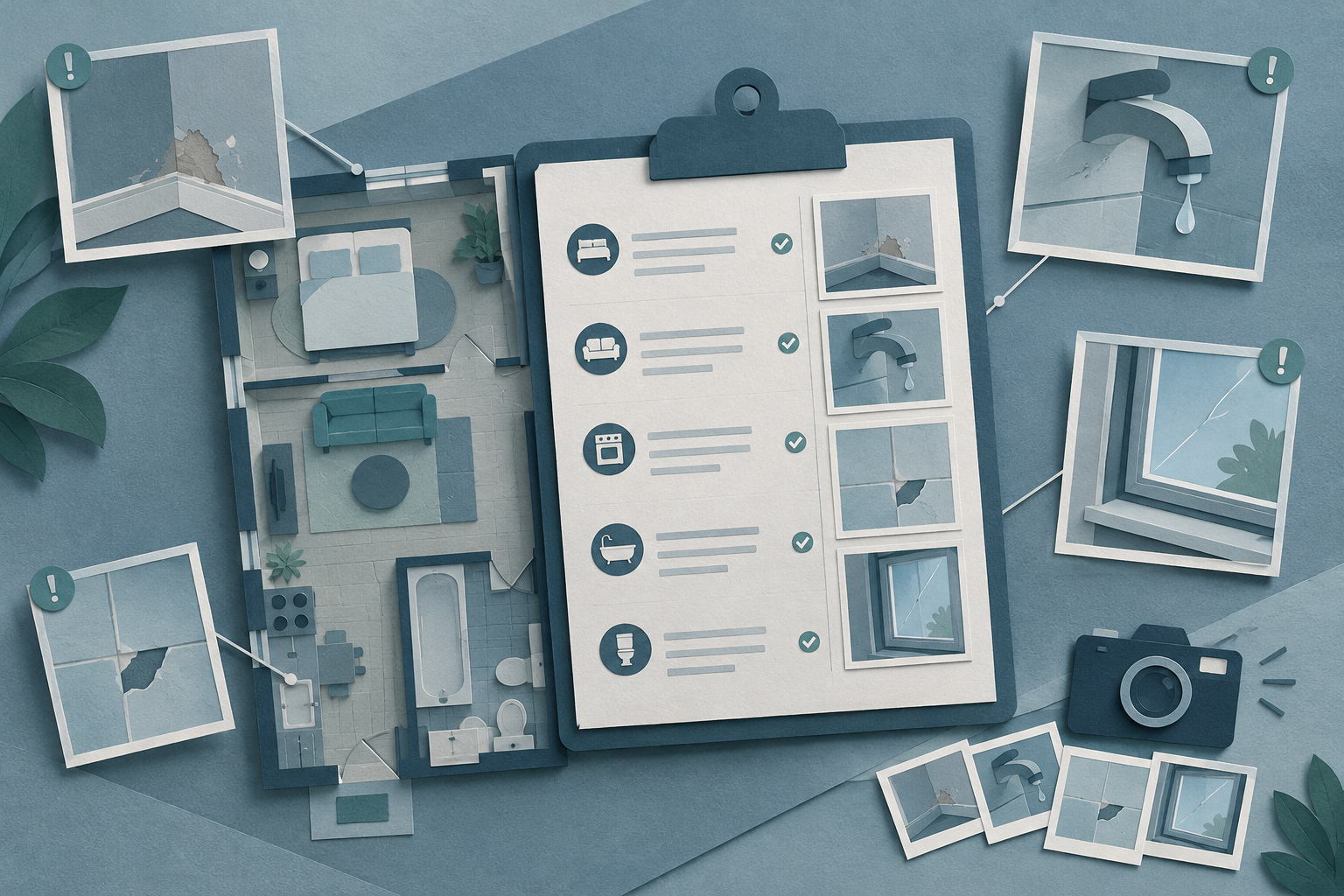
If you are filling out a move-in inspection report, the main question is simple: what details will you wish you had later? The short answer is this: record each room’s condition, note any problems, and add photos when they help explain what you saw. That gives your team a clear starting point if there is a repair, a tenant question, or a move-out check later on.
Start with each room, not the whole unit at once
The easiest reports to use later are broken down by room. Start with the kitchen, living room, bedrooms, bathrooms, and any other space that matters in the home.
For each room, write a plain note about the condition. Keep it simple. Good, needs attention, clean, damaged, or not working are often enough if you also add a short note to explain why.
This kind of room-by-room view makes it easier to find the right detail later instead of rereading one long block of text.
Write down what is already there and what looks off
A move-in report should show what was seen at the start. That means noting existing wear, damage, or anything that needs attention right away.
If a wall has marks, a faucet drips, a door sticks, or a light does not work, say so directly. Do not assume the next person will know what you meant.
If something is fine, you can still record that. A short note like “good” or “working” helps show that the item was checked.
Use photos when a written note might leave room for doubt
Photos are useful when a detail could be easy to argue about later. A picture of a stain, crack, leak, or broken fixture can make the report clearer.
You do not need a photo of everything. Use them where they help explain the note or back up what was found in the room.
If your team stores reports in one place, keep the photo with the room note so no one has to hunt for it later.
Keep the report tied to the right home and date
A useful report should clearly show which unit it belongs to and when it was made. That matters if your team manages more than one home.
Include the unit number, the property name if you use one, and the date of the inspection. If the report is for move-in, say that plainly.
Without that basic label, even a good report can become hard to trust or hard to find later.
Leave enough room for next steps
A move-in report should not just describe the home. It should also help your team act if something needs attention.
If a problem needs repair, note it in a way that can be handed off cleanly. Say what needs fixing and where it is. If your team assigns work later, that note can help keep the handoff clear.
This is one reason small teams often keep inspections, repairs, and other records close together. When the report points to a repair, the next step is easier to see.
A simple checklist you can use
If you want a quick starting point, use this order: room name, condition, notes, photos if needed, and date.
For example: Kitchen — good overall; sink drips; photo added; move-in report dated October 27. That is short, but it gives a clear picture.
The goal is not to write a perfect story. It is to leave a clear record that your team can trust later without guessing.