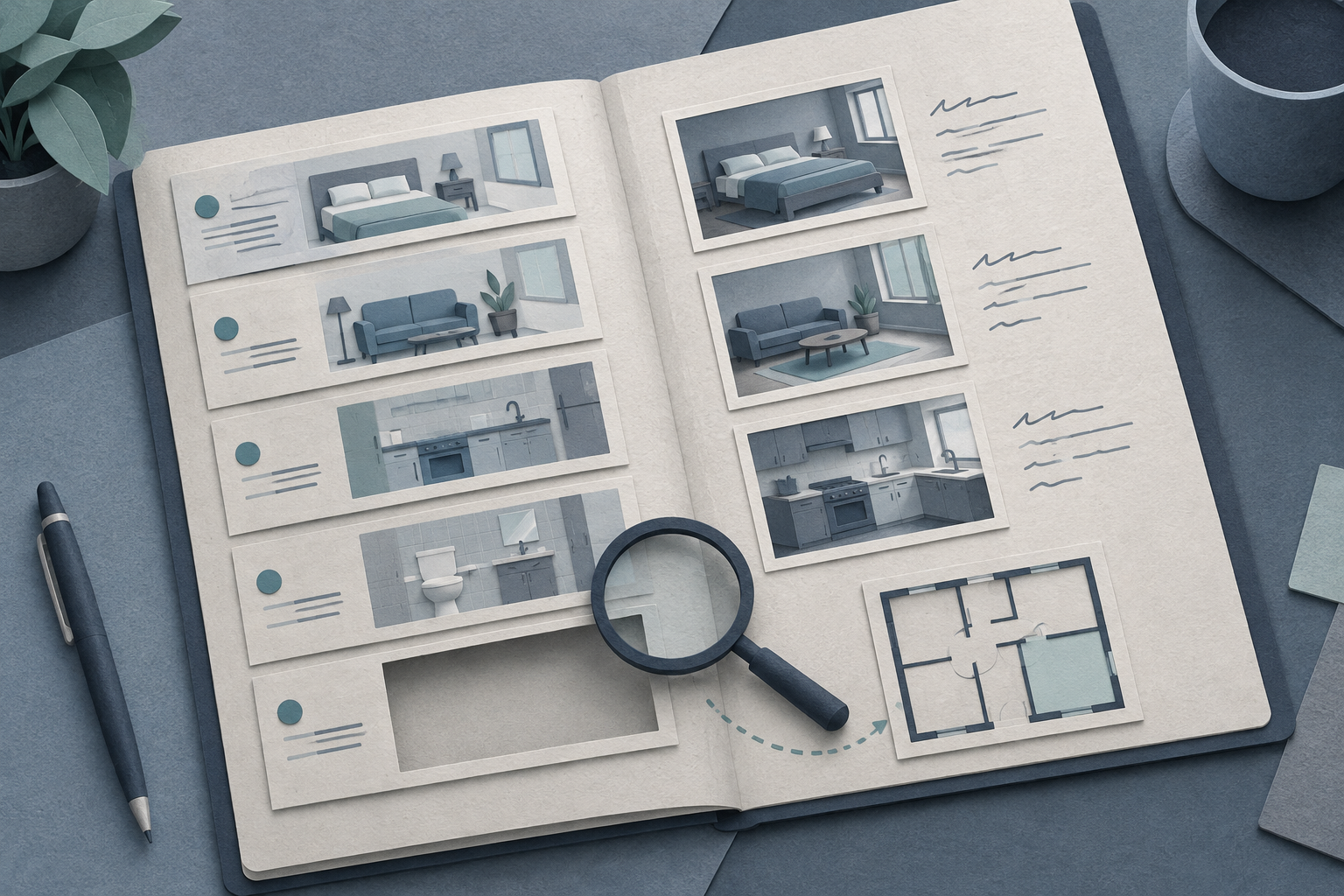
A missing detail in an inspection report can lead to a lot of guesswork later. The safest next step is to slow down and check the report room by room. Look for the unit, the condition of each space, any notes about damage or wear, and photos that match what was written. That gives you a clearer record now and fewer questions later.
Start with the room list
First, check whether every room or area was included. A useful report should not jump from one space to another with gaps in the middle.
If a room is missing, add it before anything else. That keeps the report tied to the full unit, not just the parts that were easiest to review.
Look for plain, specific notes
Each room should say more than “fine” or “okay” if there is anything worth remembering. Simple notes like “small crack near sink,” “paint scuffed by door,” or “bathroom fan not working” are much easier to use later.
If a note is vague, ask one question: would someone else know what to do next from this line alone? If not, add more detail.
Check that photos match the notes
Photos help most when they show the same issue that is written in the report. A picture of the room is useful, but a picture of the problem is better.
If the notes mention damage, make sure the photo points to that spot. If the photo does not match the note, add a clearer one or rewrite the note so the record stays honest and easy to follow.
Make sure the report points to the right unit
A strong inspection report should clearly show which home it belongs to. That matters when similar units have similar issues.
Before you save or share it, check the unit name or number, the date, and any move-in or move-out label. Small mix-ups here can cause bigger problems later.
Decide what needs follow-up now
Once the report is complete, sort the details into two groups: things to keep on record and things that need action.
Keep the record for anything that explains the unit’s condition. Flag anything that may need repair, a closer look, or a note for the next visit. That way the report does more than describe the space. It helps the team move the work forward.
A simple next step for small teams
For a small property team, the goal is not a perfect report. It is a clear one.
A good habit is to review the report once at the end, with one question in mind: if someone else opened this tomorrow, would they know what was seen, what changed, and what still needs attention? If the answer is yes, the report is doing its job.