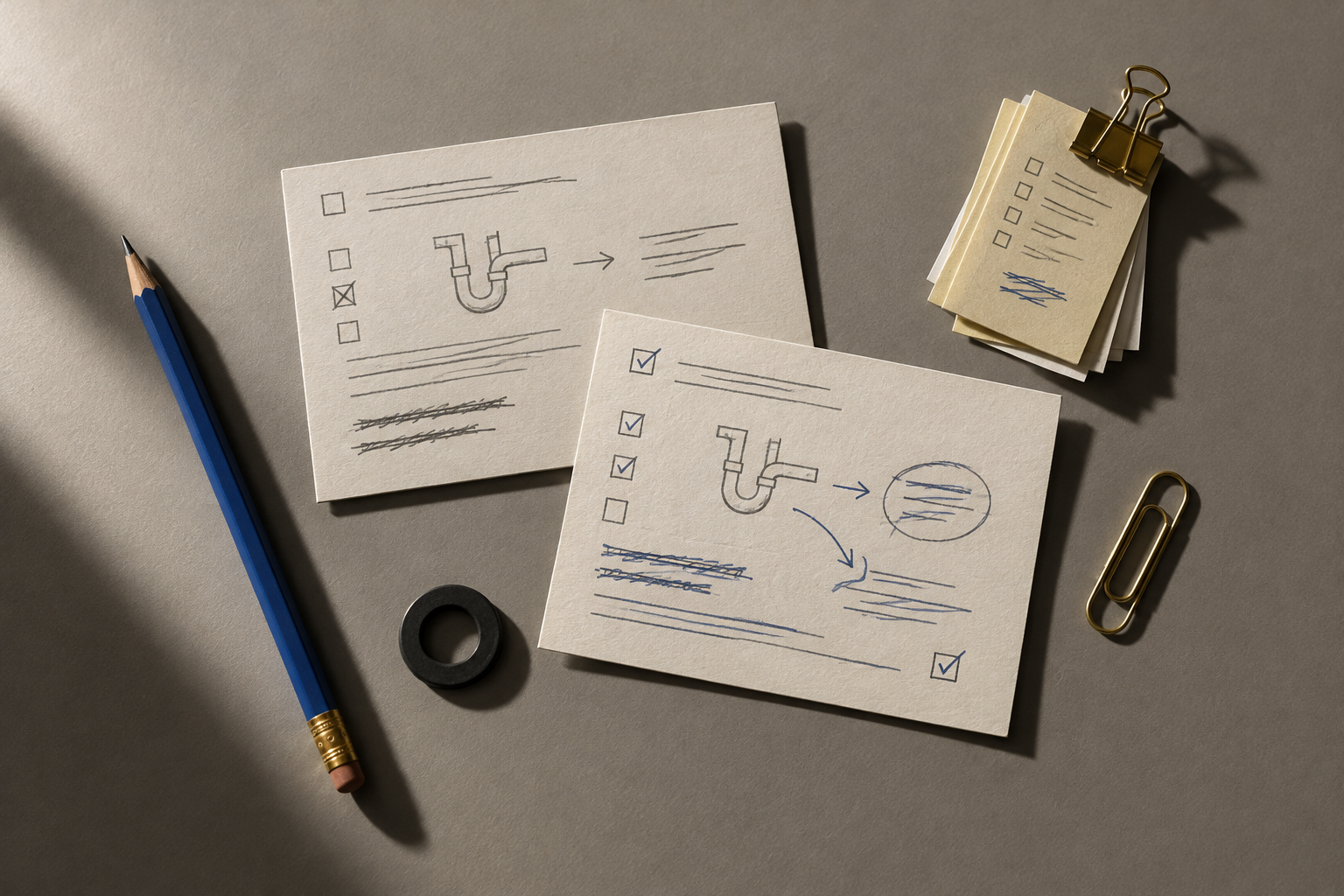
If a repair request starts as a leaking sink and turns into a cabinet issue, a follow-up visit, and a changed date, the safest move is to keep one running record instead of splitting the story across messages. That way, anyone on your team can see what the problem is, what has already been done, and what still needs attention.
Start with the original problem, then add each change
Begin with the first report exactly as it came in. Write down what is broken, where it is, and who reported it. Then add each update underneath that first note.
If the issue changes, do not replace the old details. Keep them. A request that changed from “leaking sink” to “sink leaking under the cabinet” tells the next person something useful: the first report was incomplete, but it was not wrong.
Keep four details together every time
For each update, keep these four things in the same place: the problem, the person handling it, the visit date, and the current status. This is the simplest way to keep the record useful.
Example: a request can move from scheduled to delayed to complete. If that happens, each step should stay with the same request so no one has to search through messages to figure out what changed.
Use the record to show what changed, not just what happened
A good repair record should help the next person understand the full trail. That means adding short notes like “tenant called back with more detail,” “vendor needs a second visit,” or “parts still needed.”
These small notes matter because they explain why the plan changed. Without them, a later review can look messy or unfinished even when the team handled it well.
Decide whether the request needs a new step or just a better note
Not every change means the repair has to start over. Ask two simple questions: Did the problem itself change, or did only the details get clearer? And is there a new visit, new person, or new cost to track?
If the answer is yes, add a new step and keep the old one. If the answer is no, update the note and move on. That keeps the record clean without losing the history that might matter later.
How this helps small teams stay on track
When a request stays in one place, the team can act faster. The office does not have to rebuild the story from emails, texts, and memory. The next person can open the request and see the current plan right away.
That is especially useful for small teams that manage a lot at once. A clear repair record gives everyone a little more room to breathe, because the work is easier to pick up, hand off, and finish.