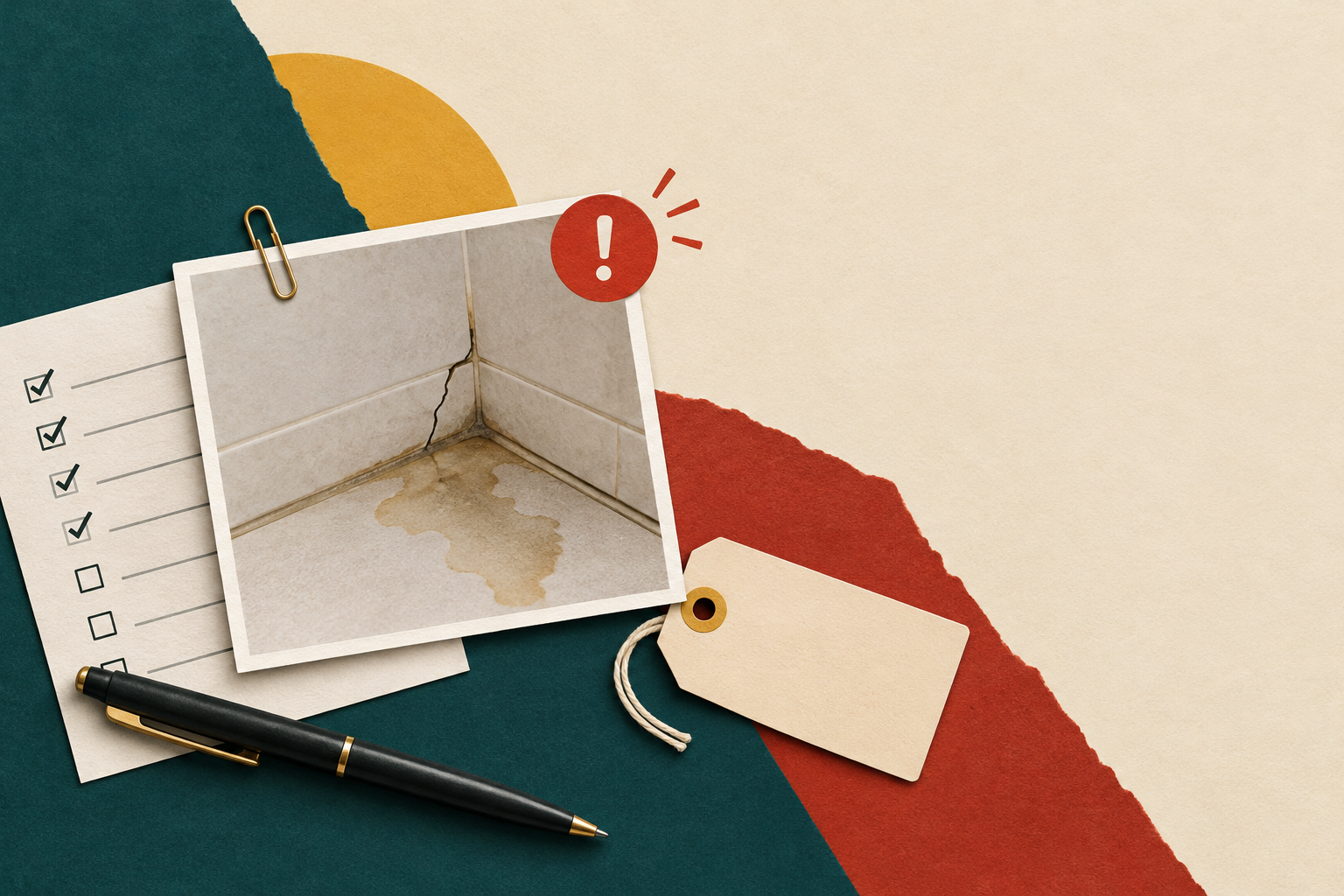
A new issue after move-in can be frustrating, but it does not have to turn into a guessing game. The best next step is to write down what you found, where you found it, and what happens next. That keeps the report useful for everyone who needs it later.
Start with the exact problem
Write down the issue in plain words. Say what you saw, what room it was in, and whether it looks new or worse than before.
For example, a note like kitchen sink leaking under the cabinet is more useful than just kitchen problem. It gives the next person a clear place to start.
Check whether it needs fast follow-up
Some issues can wait a day or two. Others need attention right away. A leak, no heat, or anything that could cause more damage should usually move to the front of the line.
If you are not sure, use a simple test: could this get worse, cause damage, or affect the tenant’s ability to use the home safely? If yes, it should be treated as urgent.
Keep the photo, note, and next step together
An inspection report is most useful when the details stay in one place. Keep the room condition, your note, and any photos together so you do not have to search later.
Also write the next step clearly. That might be follow up with maintenance, check again after repair, or compare with the move-in report. A clear next step helps the whole team stay on the same page.
Compare it with the move-in record
If you have a move-in report, look at it before you decide what to do next. That helps you see whether the issue was already there or if it changed after the tenant moved in.
A side-by-side check is especially helpful for small teams. It can cut down on back-and-forth and make the conversation more straightforward if questions come up later.
Decide who should handle it next
Once the issue is recorded, the next step should belong to one person. That may be a team member who handles repairs, or it may be you if you need to contact a vendor first.
The important thing is that the report does not end with a vague note. It should say who is handling it, what they need to do, and whether anyone needs to follow up.
A simple rule for keeping reports useful
If a new issue shows up after move-in, do not just note that something is wrong. Record enough detail that the next person can act without asking the same questions again.
That usually means four things: what happened, where it is, whether it needs urgent help, and what the next step is. With that in place, the report stays useful long after the inspection is over.