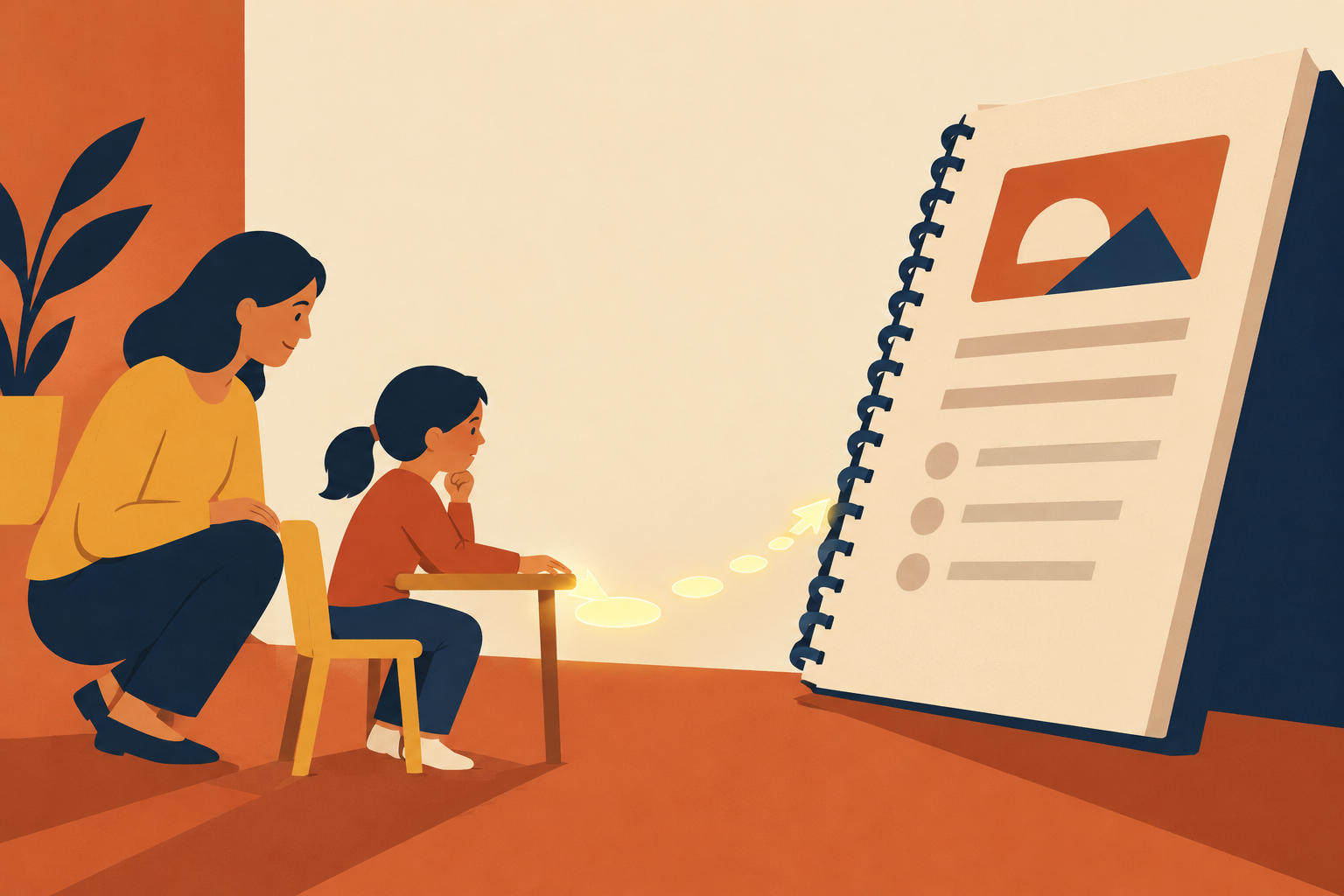
A lot of parents ask the same thing: Why is starting schoolwork such a battle? Often, the issue is not the work itself. It is task initiation, which means getting started. When a child cannot begin, they may stare, argue, delay, or melt down. The good news is that starting can be made easier with the right setup, smaller steps, and less pressure.
First, figure out what is really getting in the way
Before you jump to punishment or more reminders, look at why your child is stuck. Some children know what to do but feel overwhelmed by the size of the task. Others have trouble with working memory, which makes it hard to hold the directions in mind. Some freeze because of anxiety, and some resist because they do not know where to begin.
A helpful first question is: Can my child do this work, or do they need help breaking it down? If the task is too big, too unclear, or too long, starting will feel harder than it needs to.
Make the first step tiny and obvious
A child does better when the first step is clear and small. Instead of saying, 'Do your homework,' try, 'Take out your math folder,' or 'Open to the first problem.' A tiny first step lowers stress and makes the job feel possible.
You can also write the steps down or say them one at a time. For some students, hearing several directions at once is too much. One step at a time gives them a better chance of moving forward.
Use a short start routine
Many children start better when the routine is the same each time. For example: sit down, get water, clear the desk, open the assignment, and begin for five minutes. A routine reduces the need to make fresh decisions every day.
You do not need a long ritual. In fact, short is better. The goal is to help the brain shift into work mode without a power struggle.
Try a timer, but keep it low pressure
A timer can help a child commit to just a short burst of work. You might say, 'Work for five minutes, then we will check in.' This can feel less overwhelming than thinking about the whole assignment.
The point is not speed. The point is to get past the starting block. Once a child begins, they may often keep going longer than expected. If not, that is still progress because starting is the hard part.
Give choices where you can
Small choices can reduce resistance. For example, ask whether they want to start with reading or writing, or whether they want to work at the kitchen table or a quiet desk. Choices give a child some control without removing the task.
This works best when the choices are limited and both options are acceptable. Too many choices can make the problem worse.
Watch for the signs that support is needed
If starting schoolwork is a daily struggle, or if your child seems stuck across many areas of life, it may help to look at executive function more closely. Executive function skills include planning, organization, follow-through, focus, and time management.
Support can be useful for children, teens, and adults who have ADHD, dyslexia, anxiety, autism-related challenges, memory problems, or other learning differences. A coach or educational support professional can help identify what is getting in the way and suggest habits that fit your child’s needs.
What to do next
Start with one small change this week. Pick one assignment, break it into the first two steps, and use a short routine plus a timer. Notice what helps and what does not.
If your child still gets stuck, the next step is to get a clearer look at their executive function skills and the reasons behind the delay. Once you know that, you can choose support that matches the real problem instead of guessing.