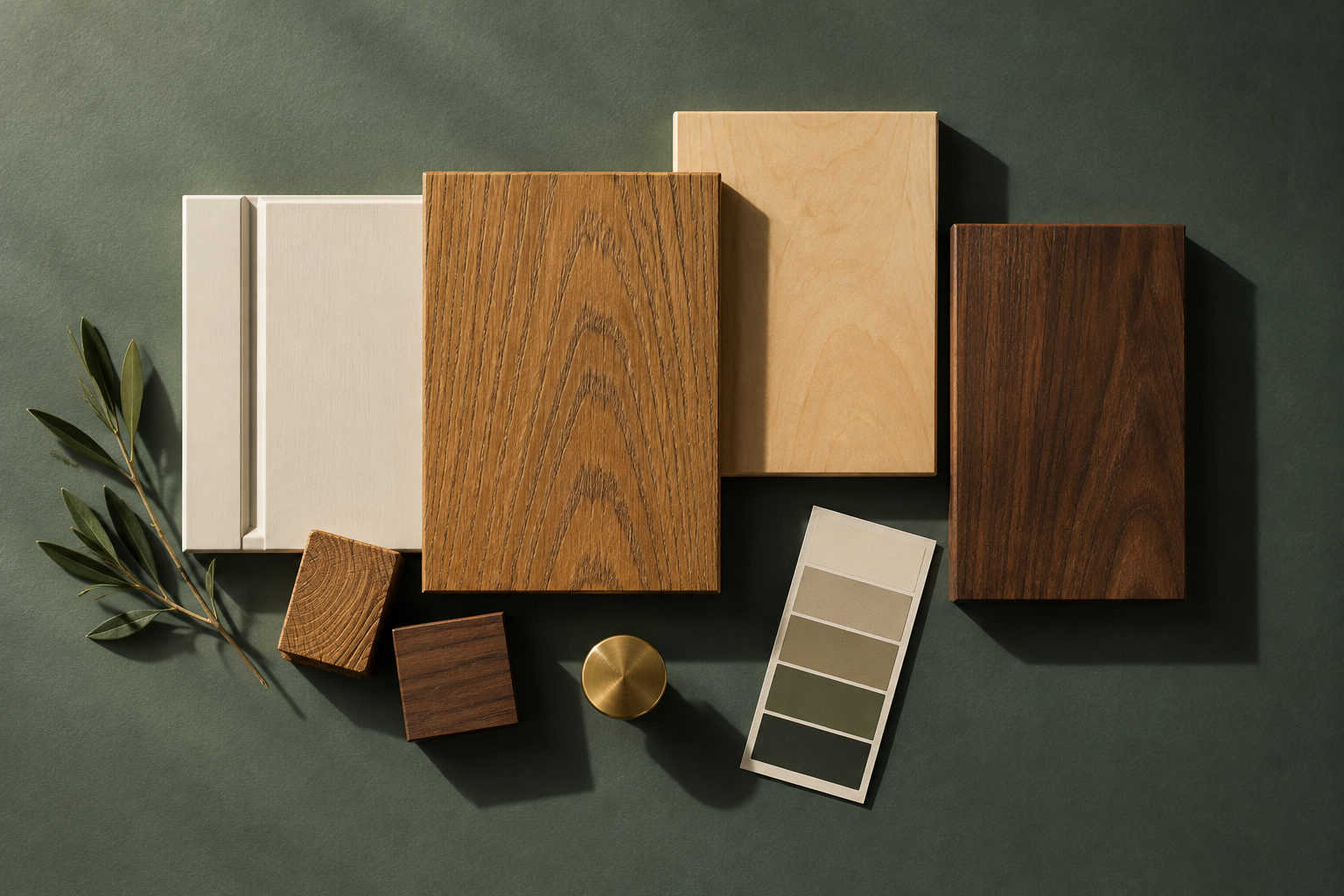
If you are planning custom built-ins, cabinets, or a furniture piece, one of the first questions is simple: what wood should you use? The short answer is that the best choice depends on how the piece will be used, how much wear it will get, and the look you want in the room. Some woods are better for paint. Others shine with stain. Some handle daily use well and show off grain. In this article, we will walk through the main choices in plain language so you can make a sensible decision before your project starts.
Start with how the piece will be used
Before you compare wood types, think about the job the piece has to do. A bookcase that mostly holds books is different from a kitchen island that gets bumped, cleaned, and used every day. A fireplace surround faces heat and becomes a room focal point. A cabinet in a quiet office has different needs than a media wall in a busy family room.
For high-use pieces, choose a wood and finish that can take daily contact. For display pieces, you can focus more on appearance and grain. If the piece will be painted, the look of the wood grain matters less than smoothness and stability. If the wood will be stained, the grain pattern matters a lot more.
Know the common wood choices in plain terms
Hard maple is a strong, fairly smooth wood. It is often a good choice when you want a clean, even look. It also works well when painted because it has a tighter grain than some other woods.
Oak has a bold grain that stands out under stain. If you want the wood pattern to be part of the design, oak is often worth considering. It can give built-ins and furniture a more traditional feel.
Cherry is known for a warmer tone that deepens over time. It can be a good choice for heirloom-style furniture or rooms where you want a richer look.
Walnut is darker and more dramatic. It is often used when the wood itself is meant to be a feature.
Paint-grade hardwoods and panel products are often used when the final look will be painted and the goal is clean lines, not visible grain. A builder may suggest these for certain built-ins or cabinetry, especially when the design calls for a smooth painted finish.
Match the wood to the finish you want
Paint and stain do different things, so the wood should fit the finish from the start. If you want painted built-ins, ask for a wood and construction method that helps the surface stay smooth. That usually means less visible grain and careful prep work.
If you want a stained finish, ask to see samples on the actual wood species you are considering. Stain can look very different from one wood to another. A stain that looks warm on cherry may look darker or more uneven on oak or maple.
If you are not sure, ask for a sample board. That small piece can save you from guessing. It is much easier to approve a sample than to change your mind after the full piece is built.
Think about durability, not just looks
Some woods dent more easily than others. That matters for places like kitchen islands, desks, and lower cabinet faces where hands, bags, shoes, and pets may all come into contact with the surface.
If the piece will be used hard, ask how the wood will handle wear and how the finish will protect it. A strong finish can help, but it does not make every wood the same.
Also think about moisture and temperature changes. Areas near kitchens, baths, or fireplaces need careful planning. A good wood choice should fit the room, not just the style board.
Use the room style to narrow the choice
The best wood is often the one that looks like it belongs in the room. In a historic home, a warmer wood with more visible character may feel right. In a newer home with clean trim and simple lines, a smoother wood and a painted finish may fit better.
You can also match the wood to other elements in the room, such as flooring, beams, trim, and doors. The goal is not to make everything match exactly. It is to make the new piece feel intentional.
For example, a white painted built-in with stained wood shelves can give you contrast without making the room feel busy. That kind of mix can work well in bookshelves, entertainment centers, and fireplace surrounds.
Ask these questions before you decide
What will this piece be used for every day?
Will it be painted or stained?
Do I want the grain to stand out or stay quiet?
How much wear and contact will the surface take?
Does the wood choice fit the room style and the rest of the house?
Can I see a sample before the full build starts?
If you can answer those questions, you will usually be close to the right decision. And if you are still unsure, that is the right time to talk through the options with the person building the piece. A good custom shop can help you compare how each choice will look, feel, and age in your home.