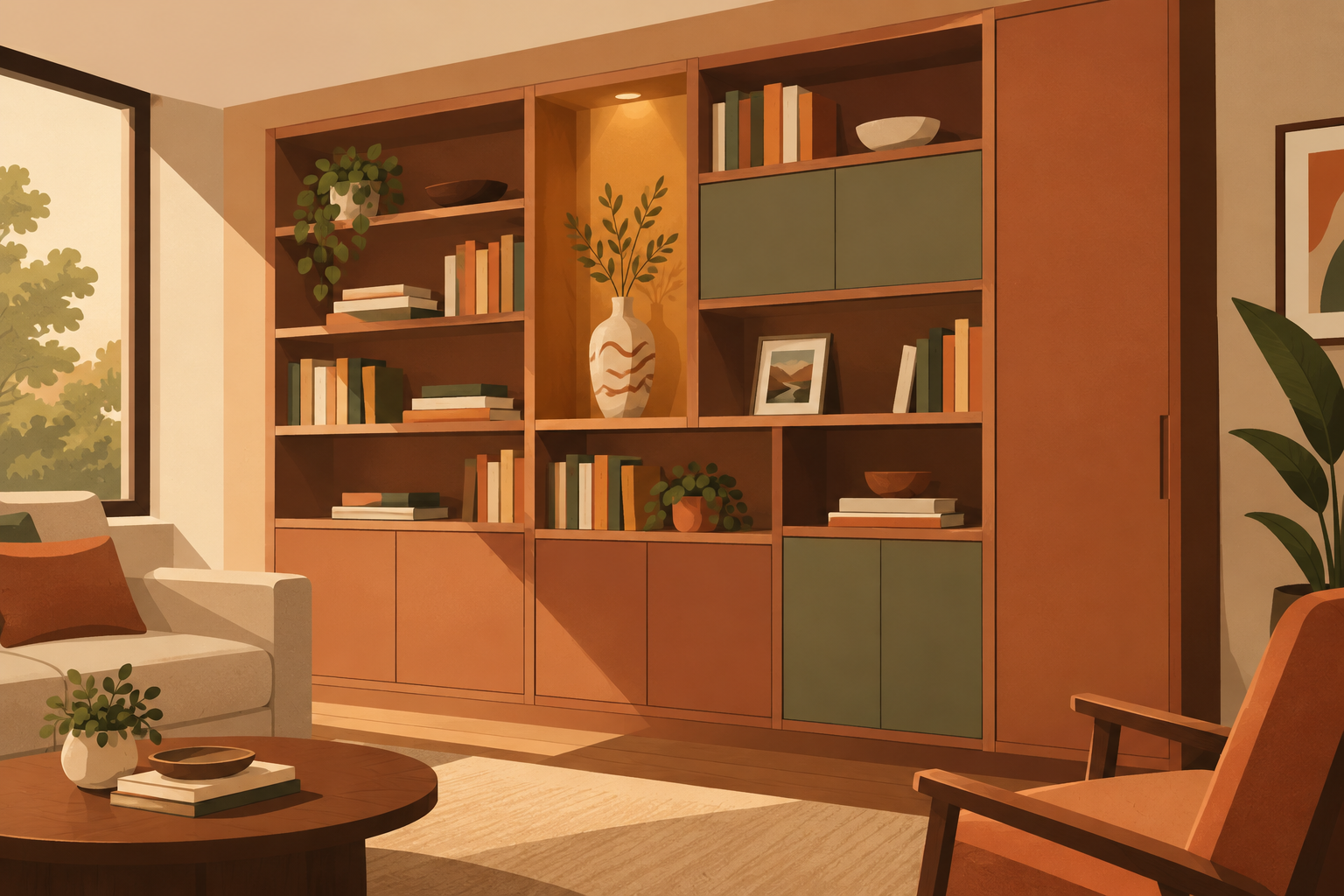
If you are thinking about a custom bookcase, the first question is usually not “How many shelves do I want?” It is “What do I need this wall to do?” A bookcase can be storage, display, and a way to make a room feel complete. The best plans start with how the room is used, what you want to store, and how much of the wall you want the piece to take up.
Start with the room’s job, not the shelf count
Before you think about shelf spacing, decide what the bookcase needs to do in the room. In a family room, it may need to hold books, games, and media gear. In a study, it may be mostly for books and a few display pieces. In a bedroom or hall, it may need to be lighter and more open.
This matters because the room’s job affects the whole layout. A bookcase that is meant to store heavy hardcovers needs different shelf support than one that is meant to show framed photos and bowls. If you know the main use first, the rest of the design choices get easier.
Choose what should stay hidden and what should stay open
Many good bookcases work best when they mix open shelves with closed storage. Open shelves are good for books, art, and items you want to see every day. Doors or drawers are better for things that look messy, like cords, board games, paperwork, or extra supplies.
A simple rule helps: if you use it often and do not mind seeing it, keep it open. If you use it often but do not want it on display, hide it behind a door or in a drawer. That balance keeps the room useful without making it feel cluttered.
Measure the wall the right way before you design anything
A custom bookcase should fit the room, not just the rough wall width. Measure the full wall, but also note baseboards, vents, outlets, windows, trim, and anything that could change the layout. If the room has an older wall that is not perfectly square, that is worth noting too.
It also helps to think about ceiling height and how high you want the top of the piece to feel. A tall bookcase can make a room feel finished and built-in, while a lower one can keep a space feeling open. The right choice depends on the room and how you want it to look and feel.
Plan shelf height around what you actually own
Shelf spacing should match the items you plan to store. Tall art books, baskets, and display objects need more room than paperbacks. If every shelf is the same height, you may waste space or end up with items stacked in awkward ways.
It is usually better to think in zones. For example, one area can be for tall items, another for standard books, and another for display pieces. That makes the bookcase easier to use and keeps it from feeling random. If you have a mixed collection, adjustable shelves can give you more flexibility over time.
Think about style details that help the piece belong in the house
A bookcase looks more natural when its details match the home around it. That can include trim style, door profiles, shelf edge detail, paint or stain color, and how the piece meets the floor and ceiling. These choices do not have to be flashy. They just need to feel like they belong in the room.
If the rest of the house has simple trim, a plain face and clean lines may be the right move. If the home has more traditional character, a little more detail can help the piece feel at home. The goal is not to make the bookcase stand out from everything else. It is to make it feel like part of the house.
Decide whether the bookcase should be built in or stand alone
A built-in bookcase is usually the better choice when you want the wall to feel finished and you want every inch of space to work hard. It can also help hide awkward wall shapes and make the room feel custom. A freestanding bookcase can make more sense if you may move it later or if you want a simpler project.
There is a trade-off. Built-ins usually give a cleaner, more tailored look, but they are tied to that room. Standalone furniture offers more flexibility, but it may leave gaps or feel less connected to the space. Thinking about how long you plan to stay in the home can help with that decision.
Make installation part of the plan from the beginning
A good design is only half the job. The piece also has to be installed cleanly and safely. That is why room conditions matter so much. Floors are not always level, walls are not always straight, and older homes can have surprises behind the trim.
It helps to plan for those conditions early, rather than treating them as a problem later. For a homeowner, the useful next step is simple: write down what the room needs to store, measure the wall, note any obstacles, and think about whether you want open shelves, closed storage, or both. With that information, a custom woodworker can help shape a bookcase that fits the room and the way you live in it.