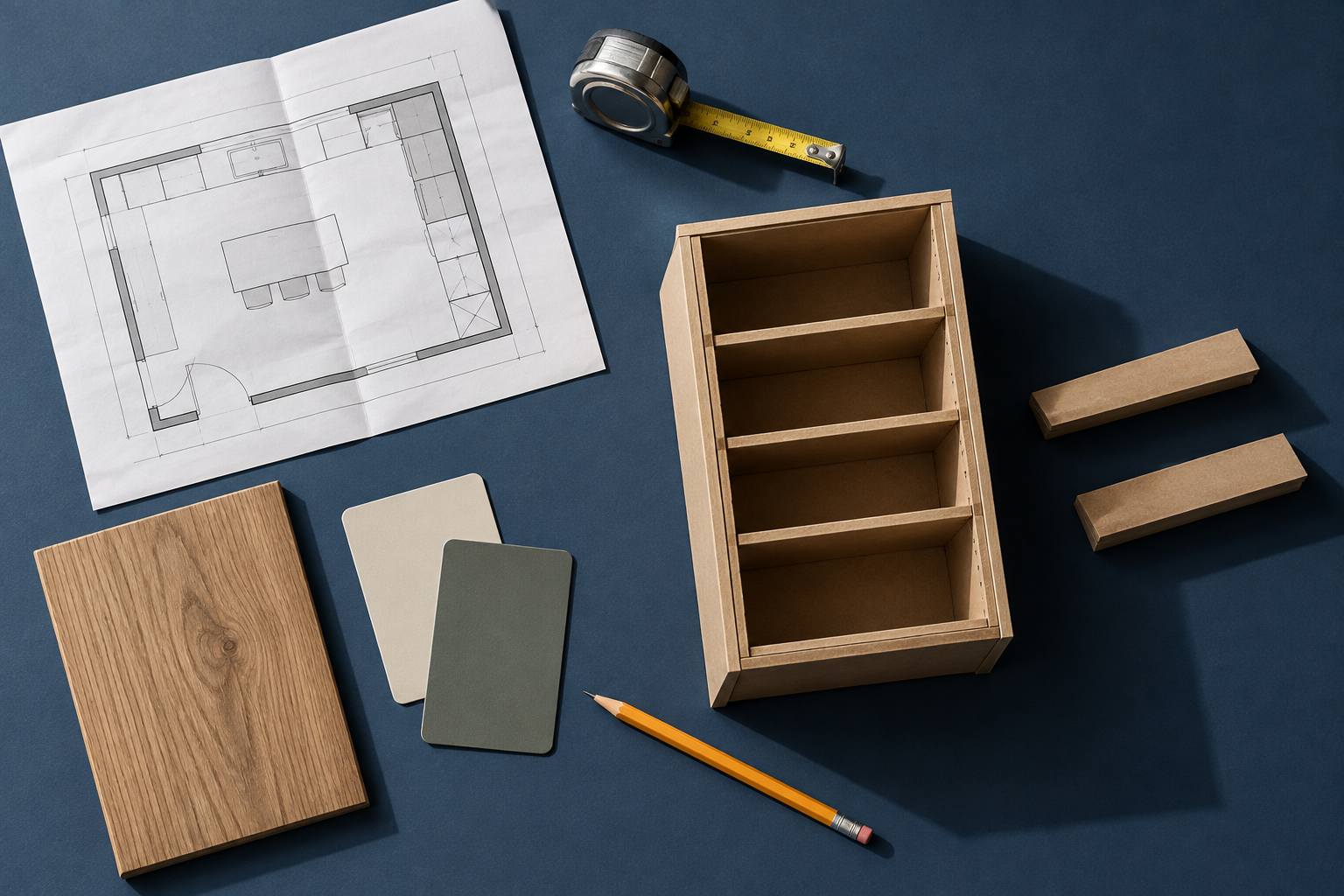
If you are thinking about custom shelves, cabinets, or built-ins, the first step is not picking wood. It is asking the right questions. That helps you find out whether the project will fit your room, your storage needs, and the way your home is built. The answer is simple: ask about design, measurements, materials, finish, and installation before you agree to anything. That gives you a clearer picture of cost, timing, and how the final piece will actually work in your home.
Start with the room, not the furniture
Before you talk about styles or wood types, ask how the piece will work in the room. A bookshelf, entertainment center, or fireplace surround should solve a real need. It might cover an awkward wall, add storage, frame a TV, or give a room a more finished look.
Ask whether the design will be made around the room’s size, shape, trim, outlets, vents, and floor level. Those details matter. A piece that looks good on paper can still feel off if it blocks something important or leaves strange gaps.
Ask how the design process works
You want to know how your idea becomes a finished project. Ask if the maker starts with a conversation, sketches, measurements, or a drawing. Ask how much input you will have before work begins.
It also helps to ask what happens if you want changes. Some projects need a small shift in shelf height, door layout, or storage space. A clear process makes those changes easier to handle before anything is built.
Be clear about storage and daily use
Good custom work should fit the way you live. Ask what will be stored in the piece and how often you will use it. Books need different shelf spacing than board games. Media gear needs room for cords and airflow. A cabinet for dishes should feel different from one built for toys or office supplies.
A simple way to think about it is this: tell them what must fit, what should be hidden, and what should stay easy to reach. That helps guide drawer sizes, shelf heights, and door choices.
Ask what materials and finish options are being used
Different woods and finishes change the look, feel, and care of a piece. Ask what material is planned and why it is a good fit for your project. You do not need to be an expert. You just need a plain answer about how the material will look and hold up over time.
Also ask about the finish. Some finishes show more grain. Some look lighter or darker. Some are easier to clean. If you have kids, pets, or a busy room, that can affect which option makes the most sense.
Do not skip the installation questions
Installation is where a lot of custom projects succeed or fail. Ask who handles the install, how the piece will be brought into the home, and whether any site work is needed before the project arrives.
You should also ask how the maker plans for uneven walls or floors. Most homes have a few quirks. A custom piece should be built and fitted with those realities in mind, not treated like a flat-pack cabinet that only fits if everything is perfect.
Look for clear answers about timing and cost
Ask when the project can start, how long it should take, and what might cause delays. A good answer does not have to be exact, but it should be honest about the steps involved.
For cost, ask what is included. Is design part of the price? Is installation included? Are there added costs for special hardware, lighting, or extra finish work? Clear pricing is easier to compare than a single number with no details behind it.
A simple checklist you can use before you decide
Before you hire anyone, try these questions: What problem is this piece solving? How will it fit the room? What will it store? What material will be used? What finish is planned? Who installs it? What does the schedule look like? What is included in the price?
If the answers are clear and practical, you are in better shape. If the answers are vague, that is a warning sign. Custom woodwork should feel planned, not guessed at.
For homeowners in Virginia looking at built-ins, bookshelves, entertainment centers, fireplace surrounds, or cabinetry, these questions can help you choose a maker who will pay attention to the room, the details, and the final installation. That is the kind of approach that gives a project a better chance of lasting well and feeling right in the home.