If you are thinking about a custom fireplace surround, the first question is not just how it will look. It is how it will work in your room. A good surround should frame the fireplace, fit the wall, and leave room for daily use, lighting, and any storage or display you want nearby. Here is a simple way to think it through before you start a project.
Start with the job you want the surround to do
Before you look at styles, decide what you want the fireplace wall to solve. Some homeowners want the fireplace to become the main focal point. Others want more balance in a room that feels plain or unfinished. Some want display space for photos, books, or family pieces. Others need the wall to feel more built-in and complete.
This matters because the best design depends on the goal. A simple mantel may be enough in one room. In another, side cabinets, shelves, or a full built-in layout may make more sense.
Measure the wall, not just the fireplace
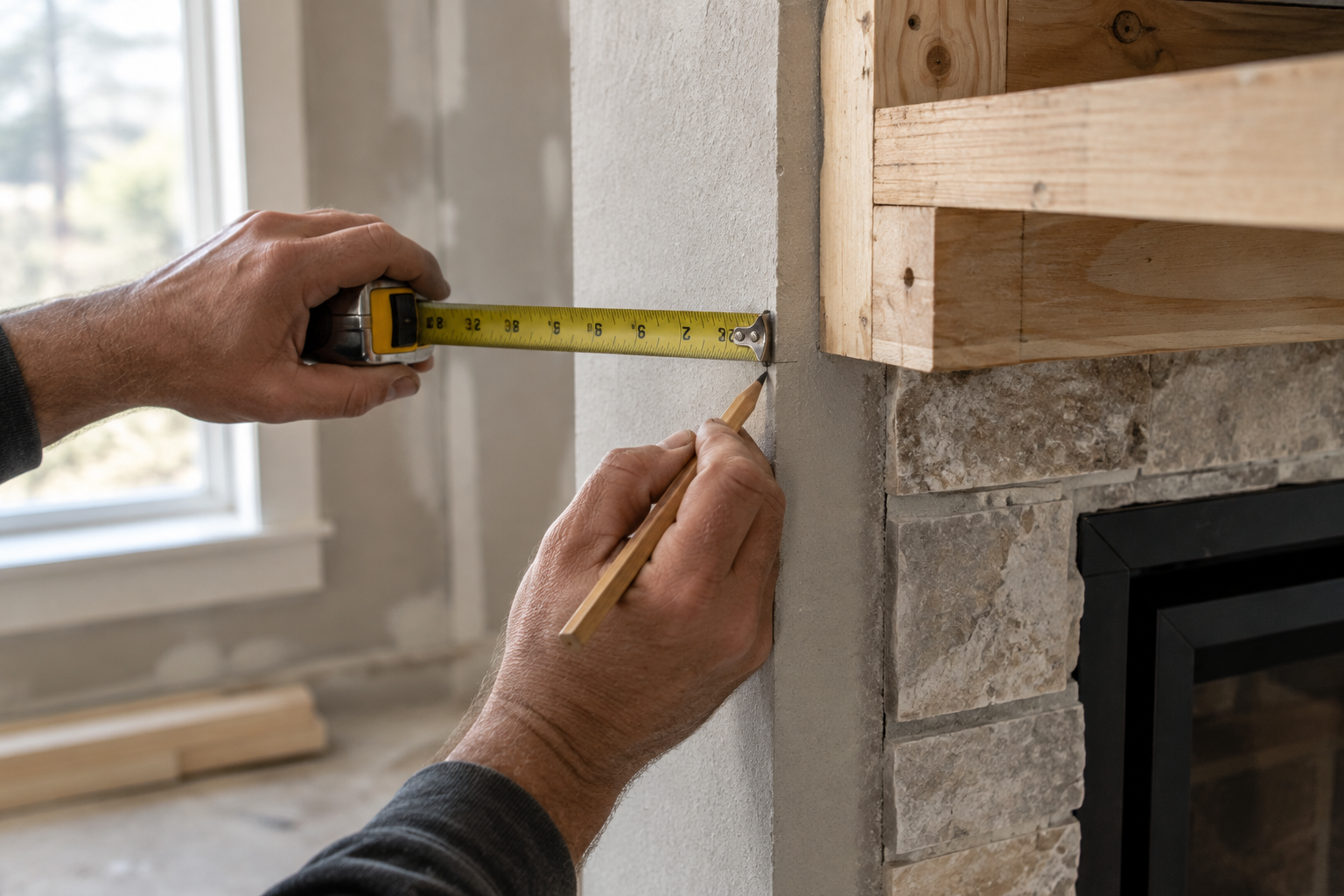
A surround has to fit the whole wall, not only the opening around the firebox. Ceiling height, wall width, nearby windows, trim, and any outlets all affect the design. A piece that looks right on paper can feel too tall, too narrow, or crowded once it is on the wall.
It also helps to think about what is already there. If the room has crown molding, baseboards, or other trim, the new work should feel like it belongs. The goal is a finished look, not a piece that seems pasted on.
Think about heat, safety, and the fireplace type
Fireplaces are not all the same. Wood-burning, gas, and electric units have different clearances and installation needs. That means the surround cannot be planned by looks alone. It has to suit the fireplace and the room conditions.
If you are changing an older fireplace wall, it is worth checking what will be covered, moved, or left open. That can affect the size of the mantel, the materials used, and how the finish is handled near the heat source.
Choose storage and display features with care
A fireplace surround can do more than frame the fire. It can also add shelves, cabinets, or built-in storage. That can be useful in living rooms, family rooms, and media spaces where clutter tends to pile up.
The key is not to add too much. Open shelves work well when you have a few items you want to show. Closed cabinets are better if you want to hide cords, games, or everyday items. If the room already feels busy, a simpler design may look cleaner and last longer visually.
Match the style of the room, not just the fireplace
A fireplace surround should feel like part of the home, not a separate idea. That means the wood shape, panel details, and finish should connect with the rest of the room. If your home leans traditional, a more detailed surround may fit. If the room is cleaner and simpler, a more restrained design may be the better choice.
Wood choice and stain color matter here too. The right finish can tie the surround to flooring, cabinets, or nearby built-ins. The wrong one can make the fireplace stand out in the wrong way.
Plan for installation before the build begins
Good fit depends on good planning. A surround has to be made for the room, then installed with care so the lines look clean and the piece sits properly against the wall. That is especially important in older homes, where walls and floors may not be perfectly square.
Before you start, ask how the project will be measured, built, and installed. If lighting is part of the design, or if the surround is being paired with side units, those details should be worked out early. That helps avoid changes later and makes the final result feel more finished.
A simple next step
If you are considering a custom fireplace surround in a Virginia home, start by deciding what problem the wall should solve: focal point, storage, display, or all three. Then measure the full space, think through the fireplace type, and choose a style that fits the room you already live in.
From there, the next step is usually a clear plan with measurements, material choices, and a layout that shows how the surround will look in the room. That gives you a better base for deciding whether a simple mantel or a fuller built-in design is the right fit.