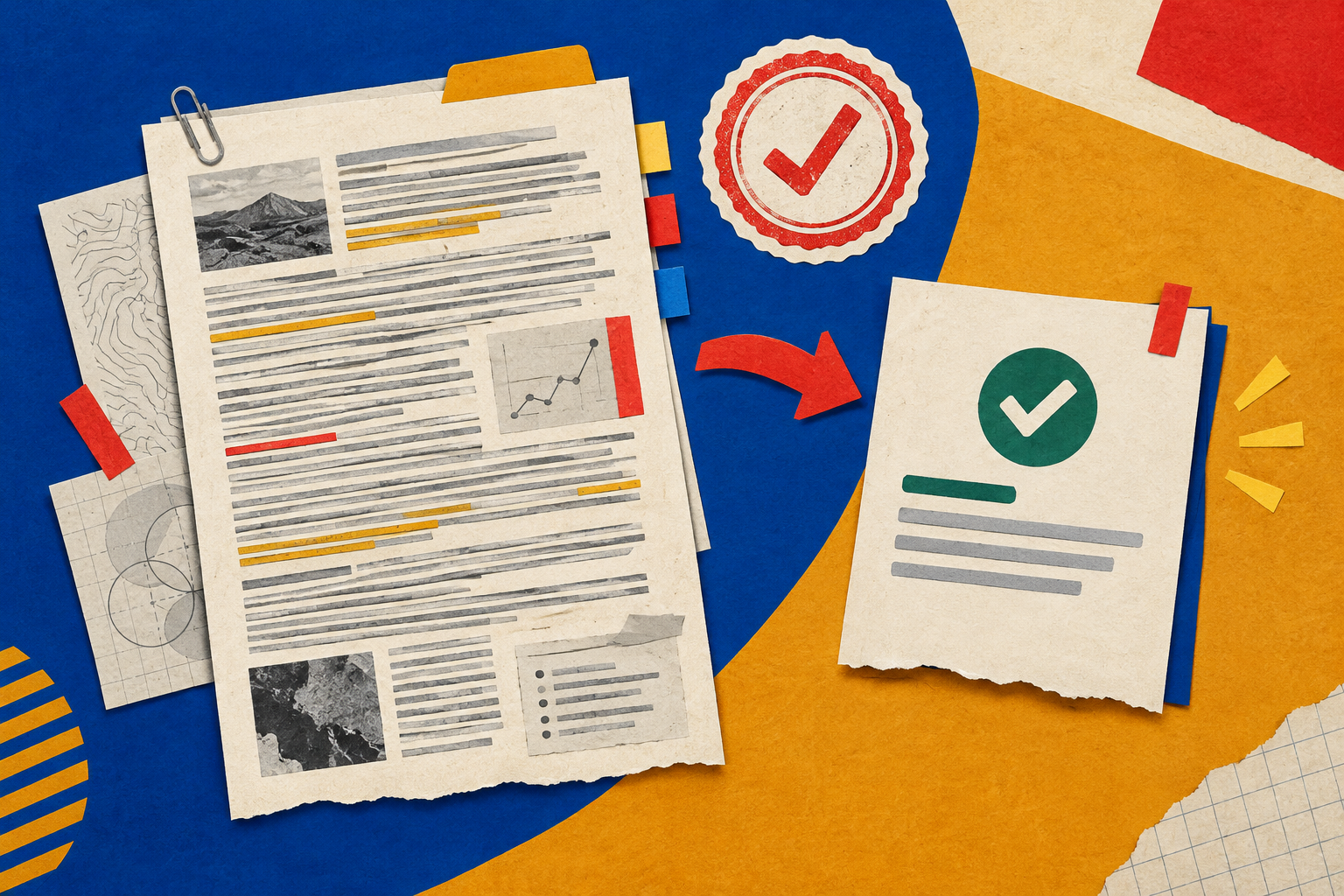
If your team keeps asking the same thing, the real choice is not just what to answer. It is where that answer should live. A source document is best for the full policy, price, or procedure. An approved answer is best for the short version your team can use again and again. The simple rule is this: keep the source in the document, and save the final wording as an approved answer only when the business has already decided what to do.
Start with the source document when the answer needs context
Use the document first when the question depends on details, exceptions, or page-level proof. That includes policy questions like refund windows, service prices, and step-by-step task instructions. A document lets people check the full wording, not just a short reply.
This matters when the answer is still tied to the original rule. For example, a team member may need to see the full refund policy, not only the line that says manager approval is needed after a certain point. The document gives the reason, the limits, and any exceptions in one place.
Save an approved answer when the same question keeps coming back
An approved answer is useful when the manager has already made the decision and the team needs one clear version to repeat. This helps with common questions that never seem to go away, like how to handle a routine request or what line to use with a customer.
If the same question shows up again and again, the team should not have to re-read the full policy every time. A short approved answer saves time and cuts down on mixed messages. It also gives new staff a simple version to follow while they are still learning.
Use manager review for unclear or judgment-based cases
If the answer is not obvious, do not turn it into an approved answer too early. Send it to a manager when the policy is unclear, the situation is unusual, or the result affects money, safety, or a customer promise.
That keeps approved answers from turning into guesses. It also helps avoid locking in the wrong wording. Once the manager decides, the final answer can be saved for next time.
A simple way to choose between the two
Ask three questions. First: does the team need the full source, or just the final line? Second: has a manager already decided this case? Third: will this question come up again often enough to be worth saving?
If the answer to the first question is yes, use the document. If the answer to the second and third questions is yes, save an approved answer too. In many small teams, both are useful: the document holds the rule, and the approved answer gives the short version people can trust fast.
A practical setup for small teams
A good setup is to keep policies, prices, and task instructions in your document library, then turn the most repeated manager decisions into approved answers. That way, your team can ask a plain-language question, see the source when needed, and still have a clear answer ready for the next person.
For example, a team member might ask, 'Can we refund this after 30 days?' The document shows the policy. If the manager has already decided how to handle that case, the approved answer gives the exact wording to use next time. That keeps the team moving without losing control of the rule.